
Chargeability as It Happens
Utilisation by engineer, team, and office updates continuously — so you can move people onto fee-earning work before the period closes, not explain the shortfall afterwards.
Loading

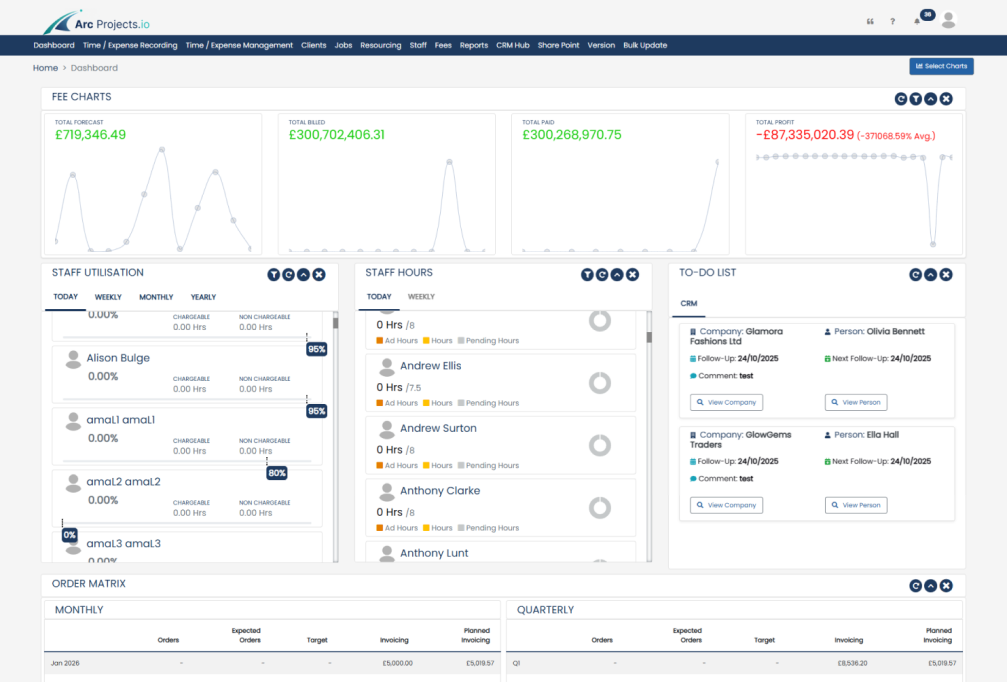
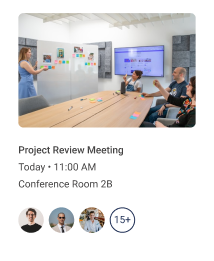
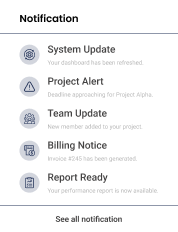
Chargeability, WIP, and margin update the moment time is approved or a cost is committed — current figures you can still influence, not a retrospective explanation after month end.
Free trial, full access
Ready-made reports
Modules to choose from
Uptime guarantee

Utilisation by engineer, team, and office updates continuously — so you can move people onto fee-earning work before the period closes, not explain the shortfall afterwards.

See which scarce specialists are overcommitted weeks ahead and rebalance the programme while there is still time to do it calmly.

Unbilled work is visible rather than buried, so invoices go out closer to the engineering being delivered and lock-up stops eating your cash flow.
Pick your discipline and see where commissions typically leak money — and what Arcprojects.io does about it.
Long programmes and repeated redesigns are the norm — the contractor changes the frame, the architect moves a core, and your team reworks calculations that were already signed off. Those hours land on an eighteen-month commission where nobody remembers what was in scope, and the extra engineering gets absorbed into the original fee.
Time books against the specific phase and package, so rework is visible the week it happens. Scope changes are recorded as variations with the hours already attached — evidence for billing rather than an argument from memory — and phase-level cost against fee shows exactly where the commission stands today.
Building services carries the coordination burden of every other discipline's decisions. Each architectural revision and structural change ripples into your ductwork, containment, and calculations — churn that consumes real engineering hours but rarely appears on any invoice because it never gets recorded against the change that caused it.
Coordination rework is logged as its own task or variation, so the cost of other disciplines' changes is measured rather than absorbed. Utilisation reporting shows when your team's hours are being consumed by churn instead of design, giving you the numbers to renegotiate scope while the job is still live.
Site investigation work leans on subcontracted drilling, lab testing, and specialist surveys — costs committed at the start of the commission but invoiced months later. Until those invoices arrive, the margin you report is optimistic, and by the time the real numbers land the reporting period is long closed.
Raise a purchase order when the work is commissioned and the committed cost attaches to the job immediately. Your margin reflects what you have genuinely committed to spend from day one, and expense capture ties site visits and disbursements to the right commission as they happen.
Civil, structural, geotechnical, and building services all book to the same commission. The job-level report says you are over budget, but not which team drove it — so the profitable discipline subsidises the struggling one, and the same pattern repeats on the next bid because nobody can see it.
Break the commission down by discipline and track fee, cost, and margin against each one independently. Directors see which teams earn and which need help, office-level chargeability comes from the same data, and your next multi-disciplinary bid is priced on evidence instead of averages.
Arcprojects.io was built in and around the built environment — civil and structural engineering, quantity surveying, and consulting practices. It understands that a commission is not a single task list but a long programme delivered by several disciplines at once.
Set each project up the way your practice actually structures work: by phase, by discipline, or by deliverable. Time, sub-consultant costs, and expenses all attach to the right level, so profitability is visible where decisions are made rather than only at the top.

Break a commission down by discipline or phase and track fee, cost, and margin against each one independently.

Works for a small consultancy and for practices running teams across several offices on shared frameworks.
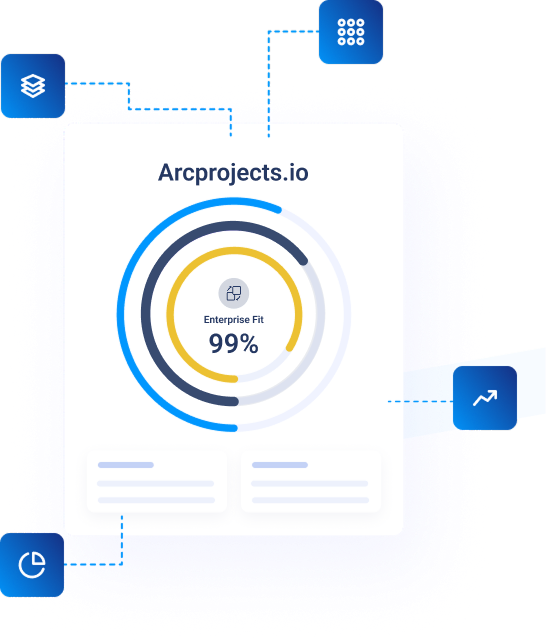
Choose the modules that match how your consultancy operates. Data recorded once flows through cost, fee, and invoicing without anyone rekeying it.

Engineers book hours to the project, phase, and discipline they are working on. Submissions pass through approval before feeding cost reports, so the numbers you act on are verified.

See where every engineer is committed over the coming weeks on interactive Gantt charts. Catch the clash over a scarce specialist long before it threatens a delivery date.

Handle lump-sum, phased, and time-charge commissions from one place. Rate cards apply the correct charge-out rate by grade automatically, from graduate to technical director.

Track work in progress so delivered engineering does not sit unbilled. Watch cost accumulate against each phase in real time and act while the commission is still live.

Record scope changes as additional services against the commission. Because the hours are already logged against them, the case for billing is evidenced rather than argued from memory.

Raise purchase orders for specialist surveys and sub-consultant fees, then track committed cost against the job from the moment it is ordered — not when the invoice eventually lands.

Invoice as phases complete or on your agreed billing schedule, generated straight from approved time and fees. Shorten the gap between engineering delivered and cash received.

Chargeability by person, team, and office alongside actual against estimated hours and margin per commission — the metrics your board asks for, available today rather than after month end.

Track tenders, frameworks, and repeat clients through the pipeline. When a bid converts it becomes a live commission without the client and scope details being entered twice.
If your consultancy runs several commissions at once and is measured on chargeability and margin, these will sound familiar.
 Commissions span multiple engineering disciplines You mix lump-sum and time-charge appointments Chargeability targets drive the business Sub-consultant costs are hard to see in real time Variations get delivered but not always billed WIP sits too long before it is invoiced Specialist engineers are the scarce resource
Arcprojects.io is used across the built environment by civil and structural engineers, geotechnical and environmental consultants, building services and MEP teams, transport and infrastructure specialists, and multi-disciplinary practices running all of them under one roof.
It also fits neighbouring professions with the same commercial model — quantity surveyors, project managers, and cost consultants who sell professional time against agreed fees and need to know whether each appointment is genuinely profitable while there is still time to do something about it.
Because the platform is modular, a small consultancy can run on timesheets, fees, and invoicing alone, while a larger practice adds resourcing, purchase orders, CRM, and full board-level reporting. Your subscription only ever reflects the modules you actually use.
Working alongside other disciplines on the same schemes? See Arcprojects.io for architects and interior designers, or book a demo and we will walk through your own commissions.

What engineering practices ask most often before moving across to Arcprojects.io.


Start a free 30-day trial with full access, free data migration, and training for your whole practice — or book a demo and we will walk through the platform using your disciplines, rates, and live appointments.